
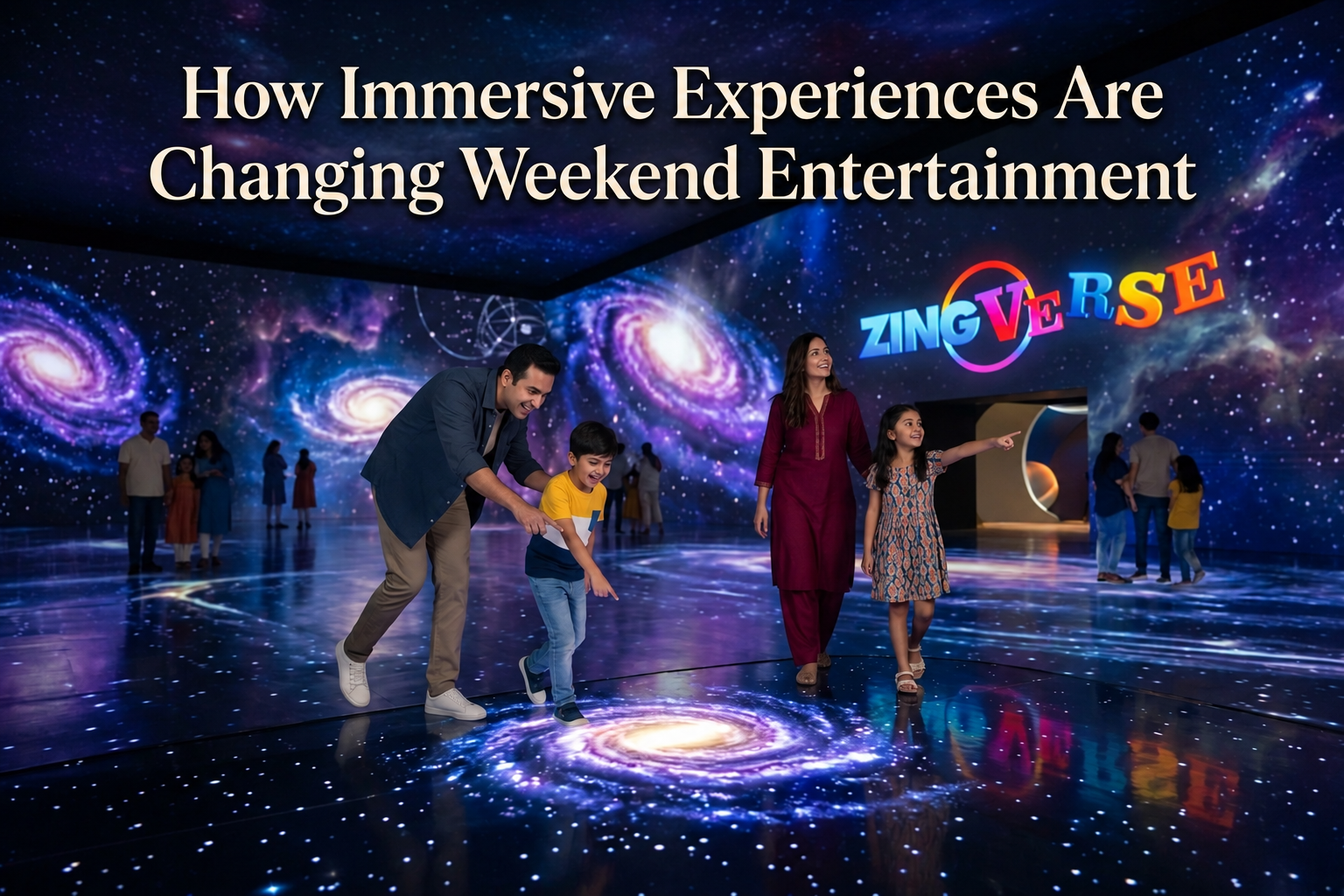
Weekend entertainment is changing. For years, a typical weekend plan meant watching a movie, visiting a restaurant, shopping at a mall or spending time at a familiar attraction.
Those options are still popular, but audiences are increasingly looking for something more participatory. They want to step into an environment, interact with it, take photographs, discover something new and share the experience with others.
This is where immersive experiences are changing the way people think about entertainment.
By combining technology, art, storytelling, sound, light and interactive elements, immersive entertainment can turn visitors from passive spectators into active participants.
What Is an Immersive Experience?
An immersive experience is designed to surround visitors with a combination of visual, audio, physical and sometimes interactive elements.
Instead of looking at a screen from a distance, visitors may move through a designed environment where projections cover walls, sounds change the atmosphere, lighting creates visual effects and interactive installations respond to movement or participation.
The objective is simple: make the visitor feel like they are inside the experience rather than simply watching it.
From Watching Entertainment to Experiencing It
Traditional entertainment often creates a clear separation between the audience and the content. A cinema has a screen. A theatre has a stage. A gallery has artworks on walls.
Immersive entertainment can blur those boundaries.
The audience becomes part of the environment. Visitors can walk through spaces, interact with installations, discover different visual details and create their own moments within the experience.
This shift is important because people increasingly value experiences that feel personal and memorable.
Why Are Immersive Experiences Becoming Popular?
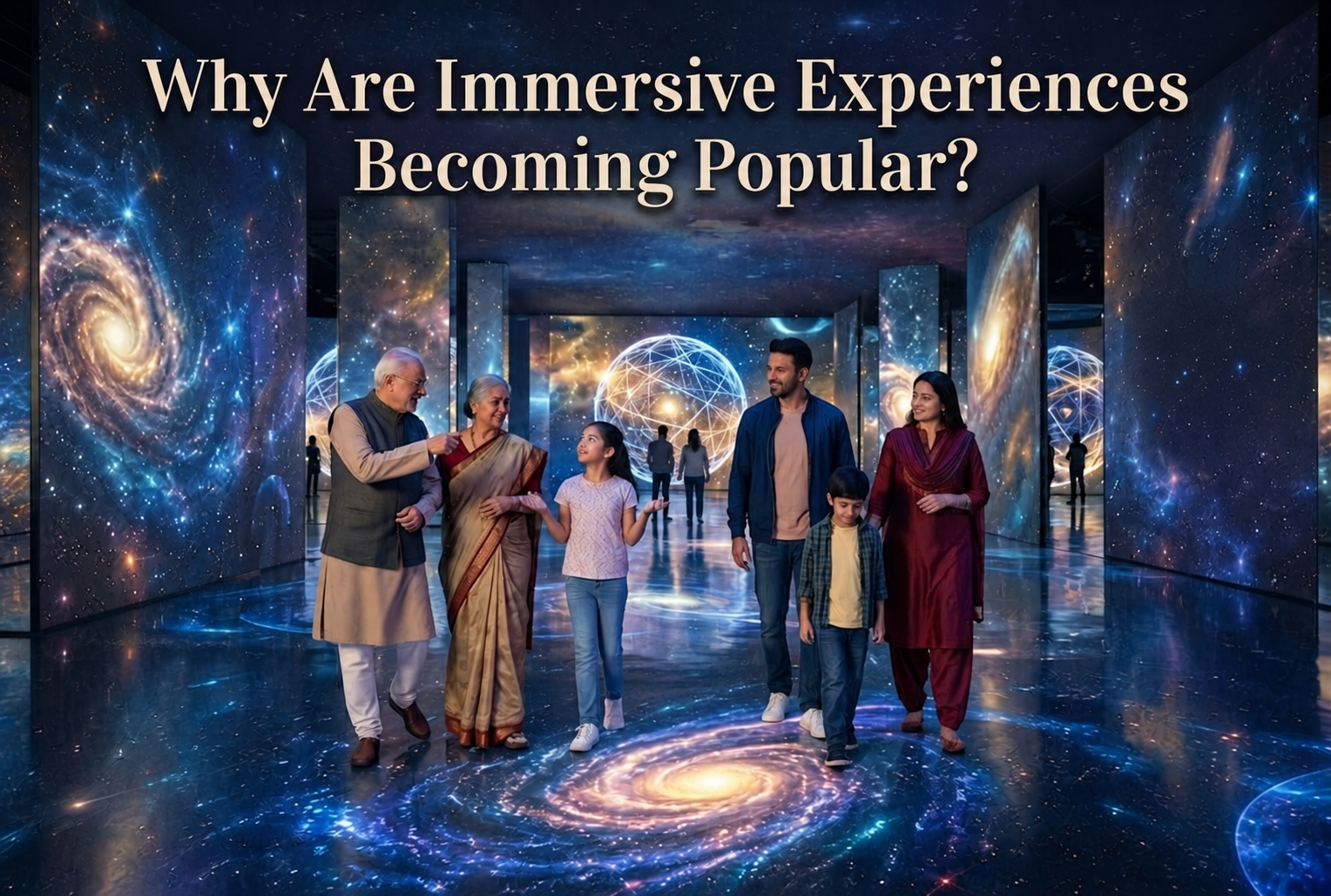
Several changes in the way people spend their free time are contributing to the popularity of immersive entertainment.
People are looking for experiences they can share. Families, couples and groups of friends often want activities that give everyone something to do rather than leaving one person watching while others wait.
There is also a growing appetite for visual experiences that are worth remembering and photographing. However, the strongest immersive attractions go beyond creating a backdrop for photographs. They create environments that people actually explore and participate in.
1. Technology Makes Spaces More Interactive
Advances in projection technology, digital displays, sensors, lighting and audio systems allow entertainment spaces to create environments that would be difficult to reproduce through traditional exhibits alone.
Large-scale projections can transform an ordinary room into a completely different setting. Sound can alter the mood of a space. Lighting can guide attention. Interactive systems can make visitors part of the visual experience.
The result is entertainment that feels dynamic rather than static.
2. Storytelling Becomes a Physical Experience
Immersive entertainment can also change the way stories are told.
Instead of following a story only through dialogue, a screen or a book, visitors can experience an environment designed around a particular theme.
Colour, sound, movement, space and visual effects can work together to communicate a mood or idea.
This makes storytelling more sensory and can create a stronger emotional response.
3. Families Can Participate Together
One of the biggest opportunities for immersive entertainment is family engagement.
A good family activity needs to work across different age groups. Parents may want something interesting and comfortable, while children may want interaction, movement and visual stimulation.
Immersive attractions can bring these needs together by giving different family members different ways to enjoy the same environment.
One person may be fascinated by the technology. Another may enjoy the visual design. A child may focus on an interactive element. Yet everyone is sharing the same experience.
4. The Experience Becomes the Memory
People often remember experiences through specific moments: a surprising visual, a funny reaction, an unusual photograph or something they discovered unexpectedly.
Immersive entertainment is naturally suited to creating these moments because the environment itself becomes part of the memory.
This is particularly valuable for weekend entertainment, when people are often looking for something they can talk about after they leave.
5. Immersive Entertainment Is Highly Shareable
Social media has changed the way people discover entertainment.
Visitors often want to capture and share interesting moments from their outings. Immersive spaces can provide visually distinctive environments that naturally lend themselves to photographs and short-form video.
But the best experiences are not designed only for social media. Shareability works best when it is a by-product of an experience that is genuinely enjoyable in person.
Immersive Experiences in Mumbai
Mumbai has traditionally offered a wide variety of entertainment, from cinemas and shopping centres to parks, museums, restaurants and large attractions.
Immersive entertainment adds another category to this mix.
For a city where weekends can be shaped by weather, traffic and limited time, indoor experiential attractions can provide families and groups with an alternative way to spend a few hours.
Zingverse: Bringing Immersive Entertainment Under One Roof
Zingverse at Metro Junction Mall, Kalyan, is an example of this emerging form of entertainment.
The experience combines art, science, technology, light, sound, projections, mirrors and interactive environments across a large indoor space.
Zingverse features three themed worlds — Zinglow, Zingfinity and Zingdom — with 25+ attractions designed around exploration and discovery.
Rather than simply viewing individual exhibits, visitors move through environments that are intended to create different moods and visual experiences.
The Zingverse Dome adds another dimension through large-scale projected visuals, soundscapes and immersive lighting.
For families and groups, the attraction demonstrates how technology can be used not just to display content, but to create a space that people experience together.
The Difference Between Immersive and Interactive Experiences
The two terms are related but not identical.
An interactive experience usually requires the visitor to do something that affects or activates part of the experience. Touch, movement or another action may trigger a response.
An immersive experience is broader. It focuses on creating an environment that surrounds the visitor through visuals, sound, space and atmosphere. An immersive experience can include interactive elements, but interaction is not always required.
Many modern attractions combine both approaches.
How Immersive Entertainment Can Change Weekend Planning
The traditional weekend outing often involves several separate activities: lunch, shopping, a movie and perhaps another attraction.
Immersive entertainment can become a central activity around which the rest of the day is planned.
For example, a family could spend the morning exploring an attraction, have lunch nearby and then return home without needing to fit several unrelated activities into one schedule.
This makes experiential destinations particularly useful when families want a focused but memorable outing.
What Makes an Immersive Experience Successful?
Technology alone does not make an experience immersive.
A successful attraction needs thoughtful design. Visual effects need to support the environment. Sound should contribute to the atmosphere. Spaces should encourage movement and discovery. Interactive elements should feel intuitive rather than complicated.
Most importantly, the experience needs a clear idea behind it.
When technology, storytelling and physical space work together, visitors stop thinking about the technology itself and simply become absorbed in the experience.
The Future of Weekend Entertainment
The future of entertainment is unlikely to be about replacing traditional activities completely.
Movies, restaurants, parks, museums and shopping will continue to be part of people’s leisure time.
Instead, immersive entertainment is likely to become another important category — particularly for people looking for experiences that combine technology, creativity and participation.
As technology develops, immersive spaces may become even more responsive, personalised and interactive. The boundary between art, entertainment, education and technology may continue to become less defined.
Why Shared Experiences Will Continue to Matter
Technology may change the way entertainment is delivered, but the human reason for going out remains surprisingly simple: people want to spend time with other people.
Families want memories with their children. Friends want experiences they can laugh about later. Couples want something different to do together.
Immersive experiences can support this by giving people something to discover collectively.
That is perhaps the most important change they bring to weekend entertainment: the experience is no longer only something you consume. It becomes something you share.
Conclusion
Immersive experiences are changing weekend entertainment by bringing together technology, art, storytelling and participation.
Instead of simply watching content, visitors can step into environments designed to stimulate their senses and encourage exploration. This creates opportunities for discovery, interaction, photography and, most importantly, shared memories.
In Mumbai, destinations such as Zingverse show how immersive entertainment can create a different kind of weekend outing — one where families, friends and couples can experience something together rather than simply spending time in the same place.
As entertainment continues to evolve, the question may shift from “What should we watch this weekend?” to something more exciting:
“What should we experience together?”
Frequently Asked Questions
1. What are immersive experiences?
Immersive experiences are environments designed to surround visitors with visual, audio, physical and sometimes interactive elements. They aim to make people feel part of the experience rather than simply observers.
2. How are immersive experiences changing entertainment?
They are making entertainment more participatory by combining technology, art, sound, lighting, storytelling and interactive elements. Visitors can explore and respond to an environment rather than only watch it.
3. What is immersive entertainment?
Immersive entertainment uses designed environments and technologies such as projections, sound, lighting, digital displays and interactive installations to create a more engaging experience for visitors.
4. Are immersive experiences good for families?
Yes. Immersive experiences can work well for families because different age groups can enjoy different elements of the same environment while still sharing the overall experience.
5. What are immersive experiences in Mumbai?
Mumbai and its surrounding areas offer an increasing range of experiential attractions. Zingverse at Metro Junction Mall, Kalyan, is one example, combining art, science, technology, sound, light and interactive environments.
6. Are immersive experiences only for children?
No. Well-designed immersive experiences can appeal to children, teenagers and adults. Different visitors may connect with different aspects such as technology, art, photography, storytelling or interaction.
7. What is the difference between immersive and interactive experiences?
Interactive experiences require visitors to participate or trigger responses, while immersive experiences focus more broadly on surrounding visitors with a sensory environment. Many modern attractions combine both.
8. Why are immersive experiences popular on weekends?
They offer something different from routine entertainment and can be enjoyed by groups, families and couples. They also create opportunities for participation, discovery and memorable shared moments.