

Introduction
Family life can be busy. Between school, work, commuting, household responsibilities and screens, finding genuine time to connect can become difficult.
Yet some of the strongest family memories are often created during simple shared experiences: playing a game, exploring a new place, cooking together, visiting a museum or discovering something completely different.
There is a reason these moments can bring families closer. Shared activities give family members something to experience together, creating opportunities for conversation, cooperation, laughter and emotional connection.
Understanding the science behind family bonding can help parents make better use of the time they already have.
What Does Family Bonding Actually Mean?
Family bonding is the process of developing stronger emotional connections between family members. It is built through repeated moments of trust, communication, attention and shared experiences.
Bonding does not necessarily require expensive holidays or elaborate plans. Small, consistent interactions can be just as meaningful.
A family meal, a walk, a board game or an afternoon exploring a new attraction can all create opportunities for connection when everyone is genuinely involved.
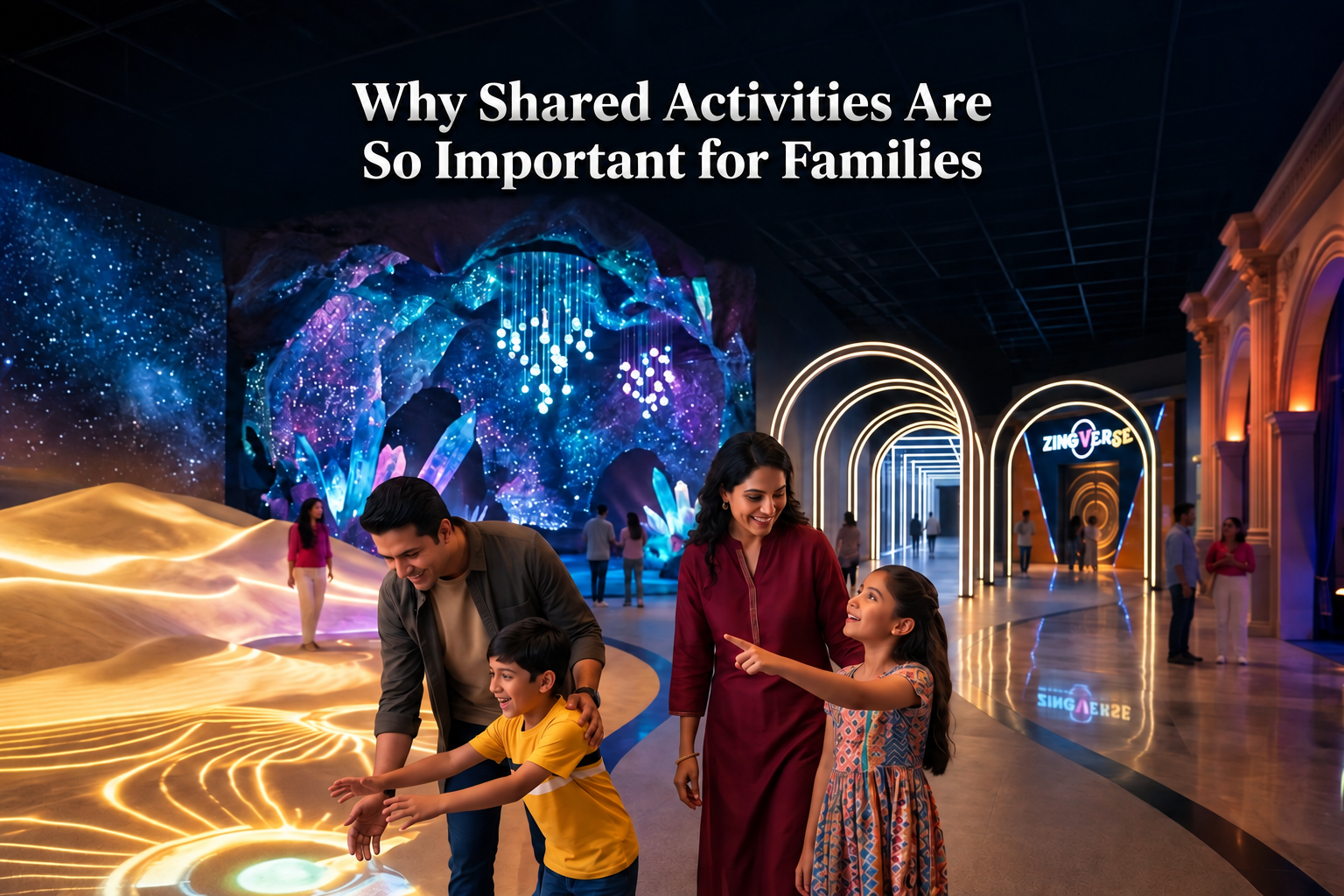
Why Shared Activities Are So Important for Families
Watching a child play or sending everyone to separate activities may keep a family entertained, but it does not always create the same opportunity for interaction.
Shared activities put family members into the same experience. Everyone has something to react to, discuss and remember.
That shared context can naturally create conversations that might not happen during everyday routines.
1. Shared Experiences Create Common Memories
One of the simplest ways activities strengthen relationships is by creating memories that belong to everyone.
Years later, family members may remember a funny moment, an unexpected discovery or a challenge they completed together. These memories become part of the family’s shared story.
The activity itself may eventually be forgotten, but the emotional memory can remain.
2. Activities Encourage Communication
Communication becomes easier when people have something happening around them.
A family exploring an interactive attraction, playing a game or preparing food together has natural opportunities to ask questions, share reactions and express opinions.
For children, this can make conversation feel less like a formal discussion and more like a natural part of the experience.
3. Working Together Builds Cooperation
Many family activities involve some form of cooperation, even when it is not obvious.
Families might solve a puzzle, navigate a maze, complete a game or simply decide what to explore next. These small moments encourage listening, decision-making and teamwork.
Children can learn that different family members bring different strengths to a shared task.
4. Novel Experiences Can Strengthen Connection
Doing the same routine every weekend can be comfortable, but discovering something new together creates a different kind of energy.
Novel experiences give families new things to talk about and remember. They can also encourage curiosity because everyone is discovering the experience at roughly the same time.
This is one reason experiential entertainment can be particularly effective for family outings.
5. Laughter Has a Social Role
Laughter is more than a reaction to something funny. Shared laughter can help people feel socially connected.
A funny photograph, an unexpected optical illusion or a playful activity can create a moment that parents and children experience together.
These small moments of joy can make an outing feel emotionally rewarding rather than simply filling time.
6. Shared Activities Reduce the “Parent vs Child” Dynamic
Family routines sometimes put parents in a supervisory role: reminding children what to do, checking homework, managing schedules or setting rules.
Shared activities can temporarily change that dynamic.
When parents participate alongside children, everyone becomes part of the same experience. The parent is no longer only supervising; they are exploring, playing and discovering too.
That change can make interaction feel more relaxed.
7. Technology Can Become Part of Family Bonding
Technology is often discussed as something that distracts families from one another. But technology itself is not necessarily the problem. The way it is used matters.
Interactive digital experiences can encourage people to look at the same thing, respond together and participate in the same environment.
Immersive experiences are an example. Instead of each person staring at a separate screen, a family can enter a technology-enabled environment and experience digital content collectively.
How Immersive Experiences Can Support Family Bonding
Immersive experiences combine elements such as light, sound, projections, mirrors, interactive installations and spatial design to create environments that visitors explore together.
For families, this can create a useful balance between entertainment and interaction.
At Zingverse, for example, visitors move through multiple immersive environments that combine art, science, technology, sound and visual effects. The experience is designed around exploration rather than simply observing an exhibit.
This creates opportunities for family members to react to the same environment, take photographs together, discover details and discuss what they are seeing.
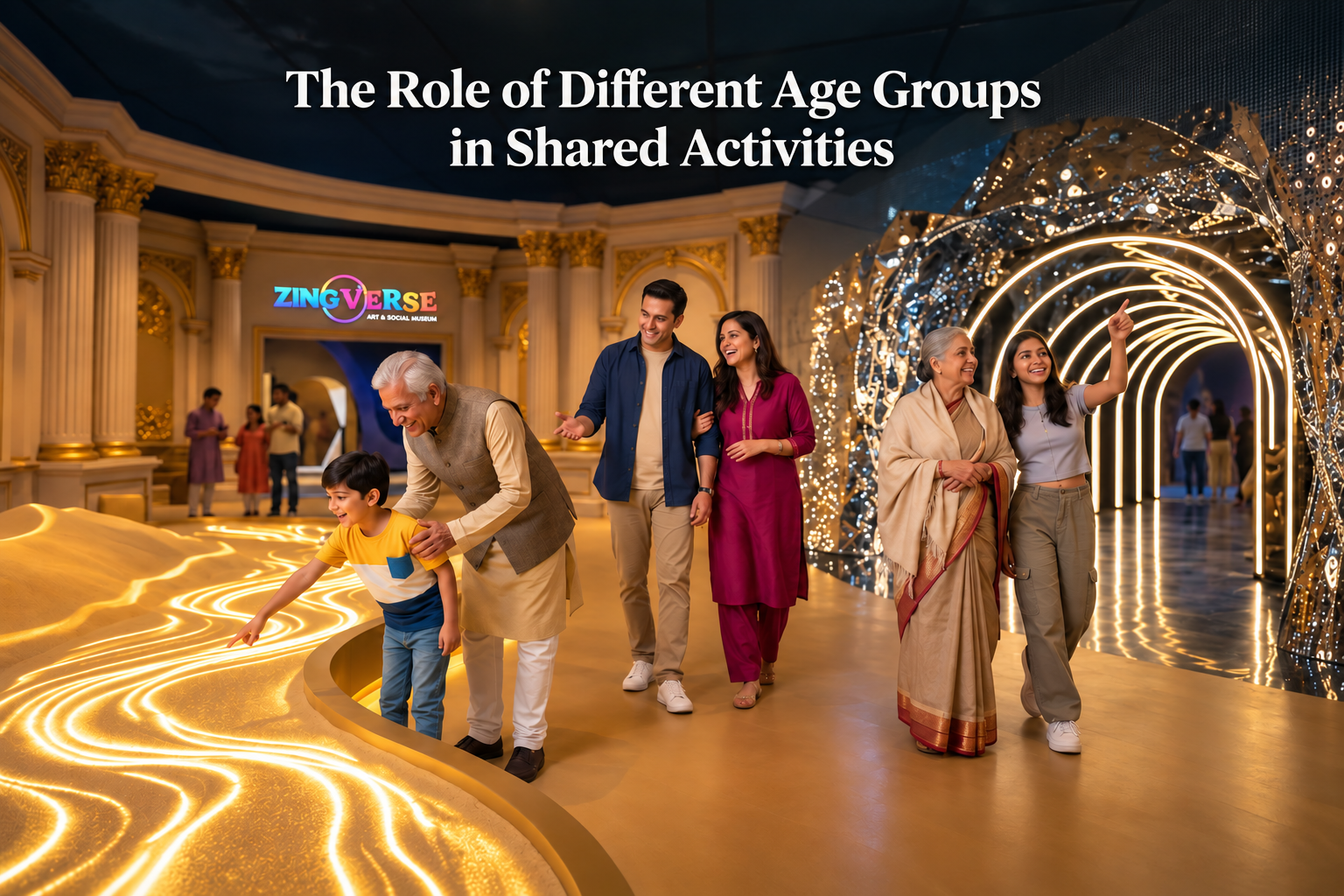
The Role of Different Age Groups in Shared Activities
One challenge for family outings is finding something everyone enjoys.
Toddlers may want play and visual stimulation. School-age children may prefer discovery and interaction. Teenagers may look for technology, creativity and social experiences. Parents may value comfort and the opportunity to spend meaningful time together.
Shared experiences can work well because different people can enjoy different aspects of the same activity.
A child may focus on interaction while a parent appreciates the design or technology. The family still shares the same overall experience.
Do Shared Activities Have to Be Expensive?
Not at all.
Family bonding is less about the price of an activity and more about the quality of attention and participation.
Families can create shared experiences through simple activities such as:
- Cooking a meal together
- Playing board or card games
- Going for a walk
- Visiting a public park
- Exploring a museum or science centre
- Creating art together
- Planning a small day trip
- Trying a new activity as a family
The important part is that family members are participating together rather than simply occupying the same physical space.
How Parents Can Make Family Activities More Meaningful
Parents do not need to turn every outing into a structured bonding exercise. In fact, that can make the experience feel forced.
Instead, focus on being present.
Put away unnecessary distractions. Let children choose some activities. Ask what they noticed. Share your own reactions. Take photographs, but don’t spend the entire outing behind the camera.
Most importantly, allow the family to enjoy the experience without worrying about making it perfect.
Why This Matters in a Busy City Like Mumbai
Mumbai families often have to balance demanding schedules, school, work and long commutes.
That makes the quality of weekend time particularly important.
A two-hour shared experience where everyone is actively participating can sometimes be more meaningful than spending an entire day together while everyone remains occupied with separate screens or activities.
This is why family-friendly experiential destinations, interactive attractions and immersive entertainment can have a valuable role in modern weekend planning.
Conclusion
Family bonding does not happen because a family simply spends time in the same place. It grows through attention, communication, cooperation and shared experiences.
Activities give families a reason to interact. They create common memories, encourage conversation, introduce opportunities for teamwork and can make everyday relationships feel more playful.
Whether it is a simple walk, a board game, a museum visit or an immersive experience such as Zingverse, the most important ingredient is participation.
In a busy world where everyone can easily become absorbed in their own routine, choosing to experience something together can be one of the simplest ways to strengthen family connections.
Frequently Asked Questions
1. What are the best family bonding activities?
Family bonding activities can include games, cooking, outdoor walks, museum visits, creative projects, day trips and interactive or immersive experiences. The best activity is one that encourages family members to participate together.
2. Why are shared activities important for family bonding?
Shared activities create opportunities for communication, cooperation, laughter and common memories. They give family members a reason to interact rather than simply being together in the same space.
3. How can parents strengthen family relationships?
Parents can strengthen family relationships by spending distraction-free time together, listening to children, participating in activities and creating regular opportunities for shared experiences.
4. Can family activities improve communication?
Yes. Activities provide natural situations for family members to talk, share opinions, ask questions and respond to one another.
5. Do family bonding activities need to be expensive?
No. Family bonding can happen through simple activities such as cooking, walking, playing games or visiting a local park. Cost is less important than participation and attention.
6. Are immersive experiences good for families?
Immersive experiences can be well suited to families because they allow multiple people to explore the same environment and react to it together. Interactive elements can also encourage participation across different age groups.
7. What is an immersive family experience?
An immersive family experience places visitors inside a designed environment using elements such as projection, sound, lighting, mirrors, digital technology and interactive installations. The aim is to make visitors active participants rather than passive observers.
8. How can families spend quality time together on weekends?
Families can choose one shared activity, limit unnecessary screen distractions and leave enough time for conversation and relaxation. The goal should be meaningful participation rather than creating a packed schedule.